

 How do you balance cost, quality and time while keeping complex engineering projects on track? And what role does collaboration play in making it all work?
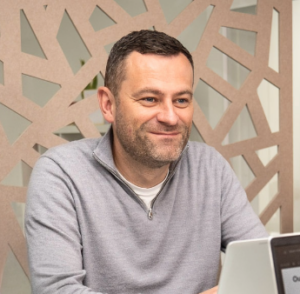
For our latest Internal Sparks conversation, we caught up with Mark Lee, Quantity Surveyor at Booth Welsh, to explore the commercial side of engineering, the importance of managing change and why successful project delivery is about much more than numbers.
From supporting engineers and navigating contracts to identifying risks before they become problems, Mark shares his perspective on the value of commercial awareness, working together and taking greater ownership of project outcomes.
Mark, for those unfamiliar with Quantity Surveying, what does your role involve at Booth Welsh?
My role is quite varied, and I’m involved in projects from the early pre-contract stages right through to delivery and close out.
A big part of what I do involves managing and analysing project costs, assessing changes to scope, supporting tendering and procurement, and monitoring how projects are performing commercially.
But it’s not just about tracking numbers. It’s about understanding what’s happening within a project, identifying potential issues early and helping the wider team make informed decisions whilst delivering the best outcome for our clients.
Ultimately, we want to deliver a successful project that meets the client’s expectations while also protecting the commercial interests of the business.
That means making sure we’re delivering what we’ve agreed to, on time and within budget whilst recognising when something falls outside the original scope and ensuring any additional work is properly managed.
People often associate Quantity Surveying with cost control. How much of your role is actually about managing risk and creating value?
I’d probably say it’s roughly 50/50 between analysing the data and using experience and communication to understand what’s happening on a project.
The data can tell you a lot. For example, if a particular engineering discipline has earned 100 hours of progress but spent 250 hours completing the work, that’s something we need to understand.
It doesn’t necessarily mean anyone has done anything wrong. It could be that the client has requested additional work, information has been missing or something has turned out to be more complex than originally anticipated.
That’s where the conversations become really important.
By working closely with engineers and project managers, we can understand what’s driving those differences and establish whether there’s a contractual change that needs to be addressed.
The earlier we identify these things, the more opportunity we have to influence the outcome. The last thing you want is to reach the end of a project and discover an issue that could have been managed weeks or months earlier.
What are some of the biggest commercial risks that project teams can overlook?
One of the biggest challenges is making sure everyone has the same understanding of what’s actually been agreed.
Contracts are often established between commercial teams, but the people delivering the work day to day might have different expectations about what’s included.
That can create situations where additional work is undertaken without anyone necessarily recognising that it falls outside the original scope.
There’s also a tendency sometimes to over-engineer things. Engineers naturally want to deliver the best possible technical solution, which is a positive thing, but we also need to make sure we’re delivering what’s been agreed with the client.
For me, it always comes back to three things:
- Cost
- Time
- Quality
They’re all connected. If the scope changes, it can affect the programme, which can affect the cost. Keeping those three elements aligned is fundamental to successful project delivery.
You’ve mentioned collaboration a few times. How important is the relationship between commercial teams and engineers?
It’s probably one of the most important lessons I’ve learned throughout my career.
I see the commercial team as part of the wider project team. We’re all working towards the same outcome, and everyone has an important role to play.
Because of the type of projects we deliver at Booth Welsh, it’s particularly important that we’re working closely with our engineers and project managers.
If there’s a disconnect, things can easily go unnoticed until it’s too late to do much about them.
I really enjoy that collaborative side of my role. I like working with engineers, understanding the challenges they’re facing and helping them navigate the commercial aspects of their projects.
We’ve also been doing more internal training around contracts, including NEC4, which is commonly used across our projects.
The aim is to help colleagues recognise potential changes and understand when they should ask for commercial support.
I don’t want people to see the commercial team as being there to check up on them. We’re there to support them, help solve problems and make sure everyone has the information they need to deliver successfully.
Has becoming an employee-owned business changed the way you think about project performance?
I think it’s something that’s starting to develop, and personally, it has definitely made me think differently.
Working in a commercial role, you’re naturally aware of how projects are performing financially. You can see when things are going well, but you can also see when a project is struggling.
With employee ownership, there’s an added sense of responsibility because the performance of the business ultimately affects all of us.
I think that’s one of the positive things about the move. It encourages people to think more broadly about the impact of their decisions.
For example, if something is going to take an additional five weeks to complete, it’s worth asking whether that work was included in the original scope and whether the business will recover the additional cost.
It’s not about discouraging people from doing the work. It’s about encouraging a more considered approach and recognising that we all have a part to play in the success of the business.
I think that mindset will continue to develop as employee ownership becomes more embedded across Booth Welsh.
Finally, if you could encourage project teams to ask one commercial question earlier, what would it be?
I’d encourage people to ask themselves: “Is this actually part of the scope we’ve agreed to deliver?”
Sometimes we’re asked to do something additional and the natural response is to get on with it, particularly when you’re trying to help a client.
But it’s worth taking a moment to consider whether it was part of the original agreement, whether it will take additional time and whether there’s a potential cost implication.
And if you’re not sure, ask.
That’s really how I’d like people to see my role: as a trusted advisor rather than someone who comes along afterwards to review the numbers.
If an engineer has spent more time on something than originally anticipated, I’m not automatically assuming there’s been a productivity issue. I want to understand why.
Perhaps the work was more complicated than expected, or the team had to spend additional time gathering information that should have been available at the outset.
Those conversations help us identify changes, support our engineers and protect the project.
Mark’s perspective is a reminder that successful engineering projects rely on much more than technical expertise alone.
Commercial awareness, clear communication and a willingness to ask questions all play an important part in delivering the right outcomes for clients and the business.
As Booth Welsh continues its employee ownership journey, that sense of shared responsibility is becoming increasingly relevant, with every team and discipline contributing to the bigger picture.
Because ultimately, successful projects aren’t delivered by individual departments. They’re delivered by people working together.